
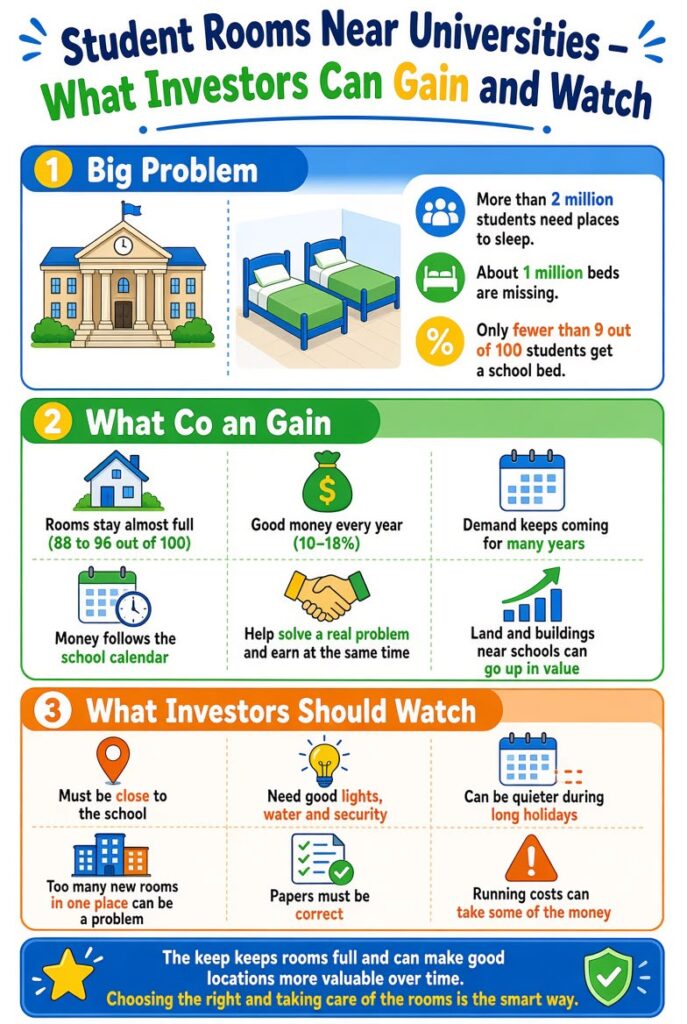
The student housing shortage in Nigeria is real and large — roughly one million beds missing, with fewer than 9% of the more than two million tertiary students living in formal accommodation. Quality private hostels and self-contained units near major universities (LASU, UNILAG, YABATECH, UI, UNN, OAU, ABU and others) are currently recording occupancy rates of 88–96%. This creates a clear opportunity, but it also carries specific risks. Here’s a balanced look at what investors can realistically gain
What Investors Gain
- High and relatively stable occupancy Well-located, decent-quality rooms near campuses stay full for most of the academic year. Occupancy of 88–96% is common in strong corridors. This translates into more consistent rental income compared with many regular residential properties that can sit vacant for longer periods.
- Attractive rental yields Gross yields in the 10–18% range (sometimes higher in secondary university towns) have been reported for properly managed student units. In high-pressure areas the combination of strong demand and limited formal supply supports better cash flow than average residential investments.
- Structural, long-term demand Student numbers keep growing while on-campus beds expand only slowly. Government programmes (including the ₦250 billion TETFund/PPP effort) will add beds but are expected to close only a small fraction of the national gap. This creates multi-year demand that is less dependent on short-term economic cycles.
- Predictable seasonal patterns Income follows the academic calendar. Peak demand runs through the main sessions, and postgraduates, part-time students or short courses often reduce the impact of long vacations. Investors who plan for this calendar can smooth cash flow better than in purely opportunistic segments.
- Ability to solve a visible problem while earning returns Investors who deliver secure rooms with reliable power, water, internet and basic management help students and parents while capturing the rental premium that quality attracts. In the right locations this dual benefit strengthens the investment case.
- Potential for capital appreciation in the right micro-locations Estates and corridors that sit close to major university gates and lecture areas have seen rising land and property values driven by the persistent shortage. Patient investors can benefit from both rental income and longer-term price growth.
Key Takeaway for Investors
The same shortage that keeps occupancy high also supports rising property values over time. By choosing our estates, you step into a market where demand already outstrips supply, turning the student accommodation boom into consistent returns instead of watching the opportunity pass by.